Introduction
Dungarees are one of the most recognizable forms of workwear. They are practical, comfortable, and easy to wear, which is why they have stayed useful for workers while also becoming a popular fashion choice. A typical pair has trousers with a bib at the front, shoulder straps, several useful pockets, and a strong fabric designed to handle regular wear.
Although denim is strongly linked with dungarees, they can also be made from duck fabric, canvas, cotton, and other durable materials. Some are made for construction, farming, and other demanding jobs, while lighter styles are designed for everyday clothing. Their simple shape makes them easy to adapt for different seasons, body types, and activities.
The story of dungarees is also much older than modern fashion. Their history connects India, British workwear, industrial labor, wartime clothing, Hollywood, and modern high street fashion. This guide explains what dungarees are, where they came from, how they are made, which types are available, how to choose the right pair, and how to care for them.
What Are Dungarees?
Dungarees are work pants that usually include a bib covering the chest and shoulder straps that hold the garment in place. They are closely related to bib overalls, although the exact meaning of the word can change depending on the country. In British English, “dungarees” commonly refers to the complete bib-and-trouser garment, while American English often uses “overalls.”
Traditional dungarees were made as work clothing because workers needed something stronger than ordinary trousers. The bib helped protect the upper body from dirt, while the trousers protected the legs. Multiple pockets also made it easier to carry small tools and useful items.
Modern dungarees come in many designs. You can find loose workwear styles, relaxed fashion versions, denim dungarees, duck dungarees, fleece-lined dungarees, and lightweight dungaree shorts. This wide range has helped the garment move from specialist work clothing into everyday wardrobes.
The Origins and History of Dungarees

The history of dungarees begins with fabric rather than the modern garment. The word is linked to Dungri, a type of coarse cloth associated with India. Historical accounts connect the term with Dongari Kapar, a cloth associated with the Dongri area of Mumbai. European traders later adopted the word and used it in connection with strong work fabrics.
Over time, dungaree fabric became valued for its hard-wearing nature. Workers needed reliable clothing that could survive physical work, dirt, and repeated use. Strong cloth offered a protective layer between the worker and the working environment.
As industrial work expanded, durable workwear became increasingly important. Miners, farmers, construction workers, and other people involved in manual labour needed clothing that could withstand demanding conditions. Dungarees became part of that practical clothing tradition.
Their story did not end when workwear became more advanced. Instead, dungarees gradually moved between work, popular culture, and fashion. That long journey explains why they can still look both practical and stylish today.
How Dungri Cloth Shaped Dungaree History
Dungri cloth is important because it helps explain the name and early identity of dungarees. The fabric was associated with India and was valued for its useful qualities. It was a practical material rather than a luxury textile, making it suitable for people who needed durable clothing.
The connection between India and Britain helped the word travel beyond its original setting. British use of the term developed over time, and dungaree became associated with strong cloth used for work garments. Eventually, the name became strongly connected with the garment itself.
This history also shows why dungarees have always been connected with practicality. Their identity was built around useful clothing, not seasonal fashion. Even modern fashion versions often keep the familiar bib, straps, pockets, and relaxed shape that came from their workwear roots.
Dungarees Through Workwear and Industrial History
During the growth of industrial work, clothing had to do more than look presentable. Miners, farmers, factory workers, road crew members, and construction workers needed garments that could tolerate movement, dust, tools, and rough surfaces. Dungarees answered this need with a simple design that covered much of the body.
Carpenter pants and carpenter jeans developed from the same general need for practical work clothing. Utility pockets, stronger seams, and room for movement made these garments useful for tradespeople. Dungarees added the bib and shoulder straps, creating a design that could stay secure while a worker moved.
The working class also helped shape the cultural identity of dungarees. They became a visual sign of manual labour and practical skill. Over time, that association became part of their appeal in fashion, where workwear-inspired clothing continues to appear in different forms.
Dungarees From Wartime Uniforms to Modern Fashion
The First World War and Second World War changed the role of women in many workplaces. As more women entered jobs traditionally held by men, practical clothing became increasingly important. Workwear allowed women to carry out physical tasks while protecting their everyday clothing.
The famous “We Can Do It!” poster by J. Howard Miller became an important symbol of wartime women workers. While the poster itself is not simply a history of dungarees, wartime images helped strengthen the connection between women’s work and practical clothing.
After the wars, dungarees continued to appear in popular culture. Hollywood and celebrities helped move workwear into mainstream fashion. What had once been associated mainly with labor could now be worn for style.
Today, dungarees can be found on the high street as well as in workshops and farms. This movement from industrial clothing to fashion shows how useful designs can survive even when their original purpose changes.
Why Are Dungarees Called Dungarees?
The name “dungarees” is linked to the Indian term Dungri and the cloth associated with it. The word was adopted into English as trade and textile connections between India and Britain developed.
The name therefore has a long history that reaches back much further than modern denim fashion. It also helps explain why dungarees are sometimes described through both the material and the garment.
It is worth remembering that terminology varies by region. A person in Britain may hear “dungarees” and immediately picture bib-and-brace work trousers. Someone in the United States may be more likely to call the same style overalls.
Dungarees vs Overalls: What Is the Difference?
Dungarees and overalls can describe very similar garments. Both may have a bib, shoulder straps, trousers, and multiple pockets. The biggest difference is often regional language rather than a completely different garment.
In Britain, dungarees is the common word for many bib-style trousers. In the United States, overalls is more common. Some American brands may use “dungarees” to describe a particular style of work pants, while other companies use it as a broad product name.
There can also be small design differences. Some overalls are made for heavy industrial work, while some dungarees are created mainly for fashion. The safest approach is to check the garment’s actual design, fabric, fit, and intended use instead of relying only on the name.
Dungarees vs Bib Overalls and Carpenter Pants
Bib overalls are one of the closest relatives of dungarees. They usually include a bib, straps, work pockets, and trousers. In many markets, the terms can be used almost interchangeably.
Carpenter pants are different because they normally look more like standard trousers. They may include tool loops, hammer loops, reinforced sections, and extra pockets, but they usually do not have a bib.
Carpenter jeans follow a similar design using denim. They are often chosen by tradespeople and DIY users because they combine familiar jeans styling with practical work features.
In simple terms, dungarees usually emphasize the bib and straps, while carpenter pants emphasize utility around the waist and legs.
Different Types of Dungarees Explained
There is no single standard type of dungaree. The best choice depends on the material, construction, fit, weather, and work involved. A lightweight pair may be ideal for casual wear, while contractor-grade dungarees need much stronger construction.
Common styles include denim dungarees, duck canvas designs, double-knee models, double-front versions, logger dungarees, rip-stop designs, and fleece-lined options. Some styles are also made in traditional, relaxed, or larger sizes.
Workwear buyers should focus on function first. Fashion buyers may care more about color, shape, fabric weight, and styling. Understanding these differences makes it easier to choose a pair that actually suits its purpose.
Denim Dungarees and Their Key Features
Denim dungarees are probably the most familiar modern style. Denim is made from cotton and has a strong woven structure that makes it suitable for regular wear. It can also become softer with use while keeping much of its strength.
Ring-spun denim is another option. Ring-spun construction can produce a comfortable fabric with a smooth feel, making it useful when dungarees need to balance durability and comfort.
Denim dungarees work well for casual clothing and moderate work. However, the weight and construction of denim matter. A lightweight fashion pair will not necessarily provide the same protection as heavy-duty work pants.
Duck Canvas Dungarees for Heavy-Duty Work
Duck fabric is a tightly woven cotton material commonly used for rugged workwear. Duck dungarees can be especially useful for jobs where abrasion and rough conditions are common.
Unlike ordinary lightweight clothing, heavy duck fabric can provide a stronger outer layer. This makes it useful for contractors, farmers, mechanics, and people working outdoors.
Duck canvas dungarees may feel stiff when new. With regular wear, the fabric can become more comfortable while retaining much of its workwear character.
Double-Knee and Double-Front Dungarees
Double-knee dungarees have an extra layer of fabric around the knees. This design is useful because the knees often receive heavy wear when a worker kneels, crouches, or moves across rough surfaces.
Double-front dungarees use a similar idea by adding reinforcement to the front of the trousers. Some designs allow protective knee pads to be inserted into the reinforced area.
These features can extend the useful life of work pants. However, extra fabric also adds weight, so they may not be necessary for someone who only wants lightweight everyday clothing.
Rip-Stop and Reinforced Dungaree Designs
Rip-stop fabric uses a special weave that helps stop small tears from spreading quickly. It can be useful for outdoor work, construction, utility work, and other activities where clothing may catch on rough objects.
Reinforced seams are another important feature. Stress points such as pockets, straps, knees, and waist areas can experience repeated pressure. Strong stitching and additional fabric can help these areas last longer.
When comparing workwear, do not judge durability by fabric thickness alone. Stitch quality, pocket construction, hardware, fabric weave, and reinforcement all matter.
Fleece-Lined Dungarees for Cold Weather
Fleece-lined dungarees add insulation for colder conditions. The outer fabric provides protection from wind and general wear, while the inner layer adds warmth.
They can be useful for outdoor jobs, winter travel, farming, and other activities where workers spend long periods outside. However, insulation can make the garment warmer than needed for indoor work.
For cold-weather clothing, consider both temperature and activity level. Someone doing heavy physical work may need less insulation than someone standing outside for long periods.
Logger and Contractor Dungarees for Tough Jobs
Logger dungarees are designed around the needs of demanding outdoor work. They often include durable fabrics, reinforced areas, and practical pockets.
Contractor-grade dungarees are similarly focused on tough working conditions. Construction and repair workers may need space for tools, strong fabric, and enough room to move comfortably.
Performance comfort dungarees try to combine these work features with easier movement. The best design is not necessarily the heaviest one. A good work garment should match the actual job.
What Materials Are Dungarees Made From?
Denim is one of the most common dungaree materials, but it is not the only option. Cotton duck, canvas, rip-stop fabric, and blended textiles can also be used.
Heavy cotton is useful when durability is important. Lighter cotton can be better for summer clothing. Fleece lining can add warmth, while rip-stop construction can improve resistance to tearing.
Material choice should depend on the intended use. A farmer working outdoors may need stronger fabric than someone wearing dungarees for a weekend walk. Similarly, someone living in a hot climate may prefer a lighter material.
How Dungaree Construction Improves Durability
Good construction is just as important as good fabric. A durable garment may use reinforced stitching, strong hardware, sturdy shoulder straps, secure pockets, and extra fabric at high-stress points.
The bib and straps also need attention because they carry part of the garment’s weight. Weak buckles or poorly attached straps can become frustrating during daily work.
Pockets should be checked as well. A work garment may need deep front pockets, rear pockets, tool pockets, or hammer loops. These details turn ordinary clothing into useful utility wear.
How Should Dungarees Fit?
Dungarees should allow comfortable movement without becoming so loose that they interfere with work. The bib should sit comfortably against the body, while the straps should hold the garment securely without digging into the shoulders.
The waist and seat should allow bending, sitting, and walking. Workwear that is too tight can restrict movement, while an excessively loose pair can catch on tools or equipment.
The right fit also depends on the style. Traditional-fit dungarees may have a more classic workwear shape, while relaxed-fit dungarees offer additional room. Fashion versions may use a narrower silhouette.
Choosing the Right Dungaree Size and Fit
Start with your waist and inseam measurements. If the manufacturer provides a size chart, compare your measurements with that chart rather than assuming your usual jeans size will always work.
Consider what you will wear underneath. Winter dungarees may need enough room for thermal clothing or a sweatshirt. Summer versions can fit closer because fewer layers are needed.
Big and Tall dungarees are designed for people who need additional length, width, or both. Choosing the correct proportions is important because simply buying a larger standard size may not provide the right fit.
Dungarees for Men, Women, and Children
Dungarees are available for men, women, and children. The basic concept stays the same, but proportions, cuts, colors, and styling can vary.
Men’s dungarees often focus strongly on workwear, with durable fabrics and practical pockets. Women’s dungarees may include more varied fits and fashion-focused shapes. Kids’ workwear and casual dungarees often prioritize comfort, easy movement, and simple fastening.
There is no universal rule about who can wear a particular style. Dungarees are flexible clothing, and the best choice is the one that fits the wearer and suits the activity.
Choosing Dungarees for Different Work Environments
Different jobs require different work clothing. Construction workers may need double-knee protection, durable duck fabric, and large utility pockets. Farmers may value strong fabric, easy movement, and weather protection.
Road crew workers can benefit from practical storage and garments that work well with other protective equipment. Outdoor workers may need fleece-lined or weather-resistant options in cold or wet conditions.
For indoor trades, comfort and flexibility may be more important than maximum fabric weight. Choosing based on the job prevents you from spending money on features you do not need.
Dungarees for Construction, Farming, and Manual Labor
Construction work places heavy demands on clothing. Kneeling, climbing, lifting, and contact with rough surfaces can quickly damage ordinary trousers. Double-knee dungarees and reinforced workwear can provide useful protection.
Farm work has its own challenges. Clothing may come into contact with soil, animals, plants, tools, and changing weather. Durable work pants with practical pockets can make daily tasks easier.
Manual labour also requires freedom of movement. A garment that is extremely strong but uncomfortable may not be the best choice. Durability, fit, comfort, and function should work together.
How to Choose Dungarees for Everyday Wear
Everyday dungarees do not need the same heavy construction as industrial workwear. A lighter denim pair can be more comfortable for walking, shopping, travel, or casual social events.
Think about how often you will wear them. If they will become a regular wardrobe item, choose a color and fit that can work with several tops and shoes.
Comfort is especially important for casual wear. Soft denim, adjustable straps, and a flexible cut can make dungarees easier to wear for long periods.
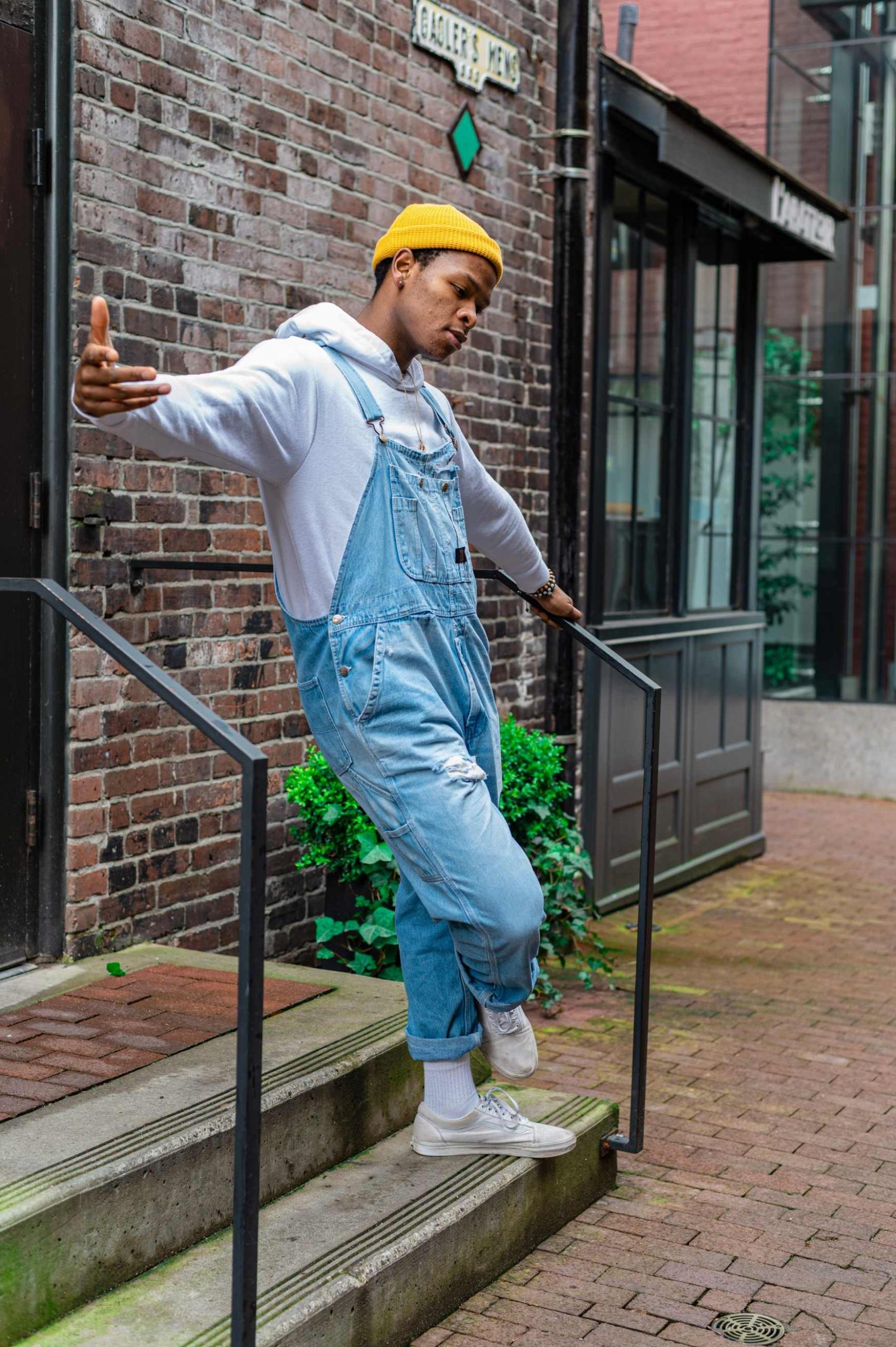
How to Style Dungarees Casually
Dungarees can be styled in many simple ways. A plain T-shirt creates a relaxed outfit, while a shirt or knit top can make the look more polished.
Sneakers work well for casual outfits, while boots create a stronger workwear feel. In cooler weather, a sweatshirt, sweater, or jacket can be worn over or under the dungarees depending on the cut.
Colors also change the overall look. Blue denim has a classic feel, black can look cleaner and more modern, while brown or natural duck fabric gives a strong workwear appearance.
What to Wear With Dungarees?
The easiest approach is to keep the rest of the outfit simple. A white or neutral T-shirt works with almost any denim dungarees. A checked shirt can create a traditional workwear appearance.
For colder weather, layer with a sweatshirt, fleece, overshirt, or jacket. Boots are useful when you want a rugged look, while sneakers create a lighter everyday outfit.
Accessories should not overwhelm the dungarees. A simple belt may not always be needed because the shoulder straps hold the garment up, but a watch, cap, or practical bag can complete the outfit.
Dungarees for Summer and Winter Outfits
Summer dungarees should ideally use breathable and lighter fabric. Lightweight cotton or denim can reduce heat and make the garment easier to wear during warm weather. Dungaree shorts are another option for casual summer outfits.
Winter versions can use heavier denim, duck fabric, or fleece lining. Layering becomes important because the bib can provide an additional layer over the torso.
The key is to match the fabric with the season. Wearing very heavy workwear in hot conditions can become uncomfortable, while thin fashion dungarees may provide little protection in cold outdoor work.
How to Wash and Care for Dungarees
Always check the care label before washing. Different fabrics can react differently to heat, detergent, and drying. Denim can shrink or change shape if exposed to excessive heat.
Wash dungarees when they actually need cleaning rather than after every short use, provided they remain hygienic and suitable for the activity. Turning denim inside out can help reduce unnecessary surface wear and color loss.
Workwear exposed to oil, chemicals, mud, or other substances may require special cleaning instructions. Do not assume that ordinary household washing is suitable for contaminated protective clothing.
How to Make Dungarees Last Longer
Regular care can significantly extend the useful life of durable clothing. Avoid excessive heat, follow the manufacturer’s washing instructions, and repair small problems before they become large tears.
Check straps, buttons, buckles, pockets, knees, and seams regularly. A loose stitch can often be repaired before an entire pocket or seam fails.
For heavy workwear, rotation can also help. Having two or more pairs means each garment gets time to dry and recover between demanding workdays.
Best Dungaree Features to Look For
The best features depend on your needs. For work, look for strong fabric, reinforced seams, useful pockets, secure hardware, and enough room for movement.
For everyday wear, comfort and fit may matter more than extreme durability. Adjustable shoulder straps are useful because they make the garment easier to fit across different body shapes.
Weather is another factor. Choose lighter materials for hot conditions and insulated designs for cold environments. If you work around rough surfaces, consider double knees or rip-stop construction.
How to Choose Durable Dungarees?
Start by identifying the hardest task the dungarees will face. If you work on your knees, prioritize reinforced knee construction. If you work outdoors, consider fabric weight and weather protection.
Next, inspect the stitching and stress points. Strong fabric is not enough if the seams are weak. Look at the pockets, straps, buckles, and areas where different pieces of fabric meet.
Finally, consider comfort. The strongest garment is not useful if it restricts movement or becomes too hot. A good pair balances durability, comfort, fit, and function.
Dungarees as a Modern Fashion Staple
Dungarees have moved far beyond their original role as protective workwear. Hollywood, celebrities, designers, and high street fashion have all helped make them part of everyday clothing.
Their appeal comes partly from their recognizable shape. The bib and straps create a look that is different from ordinary jeans while remaining easy to understand and wear.
They have also become associated with relaxed fashion. People can wear them with simple tops, sneakers, boots, jackets, and seasonal layers. This flexibility makes dungarees useful as a wardrobe essential rather than a short-lived fashion trend.
The Cultural Impact of Dungarees
Dungarees represent more than a type of clothing. They are connected with working-class history, industrial labor, farming, construction, wartime work, and later fashion culture.
The garment’s movement into popular culture changed how people viewed workwear. Clothing originally designed for manual labour became a symbol of practicality and, at times, rebellion or casual style.
Their cultural journey also explains why dungarees continue to return to fashion. Unlike many short-term trends, they have a long history and a recognizable design. The same basic garment can communicate hard work in one setting and casual fashion in another.
Common Dungaree Buying Mistakes to Avoid
One common mistake is choosing fabric based only on appearance. A lightweight denim pair may look like workwear but may not be strong enough for construction or farming. Always match the fabric and construction to the actual job.
Another mistake is ignoring fit. Buying a size that is too large can make movement difficult, while buying too small can create pressure around the waist, hips, shoulders, or thighs.
Some buyers also focus on the number of pockets without considering pocket placement. Pockets should be useful for the tools and items you actually carry. Finally, do not ignore care instructions, because poor washing and drying habits can shorten the life of even high-quality dungarees.
Conclusion
Dungarees have survived for centuries because they combine simple design with practical function. From Dungri cloth and its Indian roots to British workwear, industrial clothing, wartime garments, Hollywood fashion, and today’s high street styles, their history is unusually broad.
Modern dungarees are available in many forms. Denim, duck canvas, rip-stop, fleece-lined, double-knee, logger, contractor, traditional-fit, relaxed-fit, and performance comfort designs serve different needs. The right choice depends on your work, climate, body shape, preferred style, and expected level of durability.
Whether you need rugged workwear for construction or farming, comfortable clothing for everyday life, or a classic fashion piece, dungarees can be a practical choice. Choose the material and construction carefully, get the fit right, follow the care instructions, and they can remain useful for years.
FAQs
What Are Dungarees?
Dungarees are bib-style trousers with shoulder straps. They were originally strongly associated with workwear but are now also widely worn as casual and fashion clothing.
Are Dungarees the Same as Overalls?
They can be. In British English, dungarees commonly describes bib-and-brace trousers, while American English often uses overalls for a similar garment.
Why Are Dungarees Called Dungarees?
The word is connected with Dungri, an Indian cloth associated with the origins of the term. The name later entered English through historical textile and trade connections.
What Fabric Is Best for Dungarees?
The best fabric depends on the purpose. Denim is versatile, duck canvas is useful for heavy-duty work, rip-stop can help resist tearing, and fleece-lined fabrics provide extra warmth.
Are Dungarees Good for Work?
Yes. Properly designed work dungarees can provide durable fabric, reinforced knees, useful pockets, and good freedom of movement. The correct design should be selected for the specific job.
How Should Dungarees Fit?
Dungarees should allow comfortable movement without being excessively loose. The bib should sit comfortably, the straps should not dig into the shoulders, and the trousers should provide enough room for bending and sitting.
Can Dungarees Be Worn Casually?
Yes. Casual dungarees can be paired with T-shirts, shirts, sweaters, sneakers, or boots. Lighter denim styles are especially suitable for everyday wear.
Are Dungarees Suitable for Summer?
Lightweight cotton or denim dungarees can work well in summer. Dungaree shorts can also provide a cooler alternative for casual warm-weather outfits.
Are Fleece-Lined Dungarees Good for Winter?
Fleece-lined dungarees can provide additional warmth during cold weather. They are especially useful for people who spend long periods outdoors.
How Do You Wash Dungarees?
Follow the garment’s care label. Avoid excessive heat when washing or drying denim and other cotton fabrics because high temperatures can cause shrinkage and unnecessary wear.
How Long Do Dungarees Last?
Their lifespan depends on fabric, construction, frequency of use, working conditions, and care. High-quality workwear with reinforced construction can last much longer when it is maintained properly.
What Are Carpenter Dungarees?
Carpenter dungarees are workwear designs influenced by carpenter pants and jeans. They often include practical pockets, tool storage, reinforced areas, and durable fabric for tradespeople.
What Are Double-Knee Dungarees?
Double-knee dungarees have additional fabric around the knee area. This reinforcement helps protect one of the parts of work trousers that often receives the most wear.
Are Dungarees Fashionable?
Yes. Dungarees have become a modern fashion staple as well as workwear. Their long history, recognizable shape, and easy styling have helped them remain popular across different generations.
5 SEO Title Ideas
- Dungarees: History, Types, Styles, and Complete Buying Guide
- Dungarees: Everything You Need to Know About Workwear and Fashion
- Dungarees: Origins, Materials, Fits, Types, and Styling Tips
- Dungarees: A Complete Guide to History, Workwear, and Modern Fashion
- Dungarees: How to Choose, Style, Wear, and Care for Them
Meta Description
Dungarees explained: discover their history, types, materials, fits, workwear uses, styling ideas, care tips, and how to choose the right pair.