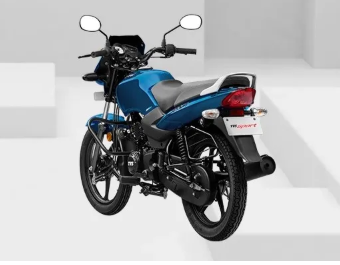
The TVS Sport name might suggest a high-powered motorcycle, but the model is best understood as an efficiency-oriented 110 cc class commuter. It is designed for buyers who want dependable low-speed response, a comfortable daily riding position and reasonable running requirements. Its performance should therefore be judged against everyday tasks, not against race-focused machines such as the TVS Apache RR 310. Someone travelling regularly through town can gain more from smooth starting, easy control and practical fuel use than from dramatic peak-power figures.
What kind of performance does the TVS Sport provide?
TVS lists a 109.7 cc air-cooled, fuel-injected, single-cylinder engine producing 6.03 kW at 7,350 rpm and 8.7 Nm at 4,500 rpm. It is paired with a four-speed gearbox. The manufacturer’s published maximum-speed specification is 90 km/h, but that figure does not establish a safe operating speed for every journey or a guaranteed result under load. The intended strength of the engine is straightforward day-to-day movement with a manageable amount of power.
ETFi, or Eco Thrust Fuel Injection, controls fuel delivery electronically. The practical benefit is consistent response when the system is working and the motorcycle is properly maintained. On a test ride, observe pulling away from a junction, changing gears and holding a normal urban pace. It is better to experience how the motorcycle responds to your usual riding style than to compare its small numerical power difference with an unrelated performance model.
Handling traffic and narrow roads
A relatively light commuter can be easier to manage when parking outside a shop or making repeated turns through local streets. The TVS Sport’s specification lists a kerb weight around 112 kg for the electric-start version and a wheelbase of 1,236 mm. These figures suggest compact proportions, yet balance, handlebar reach and the rider’s strength still determine how manoeuvrable it feels. Try reversing the motorcycle on a slight slope and turning it inside a normal parking space.
A long-distance highway rider may want different equipment, engine reserves and weather protection. The Sport’s purpose is more modest: cover routine journeys economically with simple controls. If most days involve dense city traffic and short stretches of smoother road, that focus can be an advantage. Riders should still practise controlled braking, correct lane positioning and smooth clutch action. Ease of use comes from sensible sizing and skill, not from assuming a smaller motorcycle cannot create risk.
Comfort from the seat and suspension
TVS highlights an extra-long seat, a telescopic front fork and five-step adjustable rear hydraulic suspension. These features are intended to suit common Indian commuting conditions, including changing passenger loads. The exact level of comfort depends on road surface, rider size and adjustment. A long seat can support two people, but only if both have appropriate space and secure foot placement. Ask a regular passenger to sit on the bike during a showroom assessment.
The rider should sit naturally without overstretching arms or bending the knees awkwardly. Check the controls while wearing suitable shoes and make sure the mirrors show traffic clearly. During a test ride, include a normal road joint or speed hump at a safe speed and observe how the motorcycle settles. Suspension should never be expected to eliminate the effect of deep potholes. Avoid carrying loads that exceed the manual’s limitations or placing heavy items where they interfere with steering.
Fuel efficiency and practical operating costs
A major reason for choosing the TVS Sport is its emphasis on mileage. The engine’s modest size, fuel injection and commuter gearing contribute to that aim, but the actual result depends on conditions. Repeated stops, aggressive acceleration, low tyre pressure and an overloaded motorcycle can all raise consumption. The 10-litre fuel tank is useful for planning refuelling, though its size alone cannot establish how many kilometres a particular rider will travel between stops.
Keeping a simple log of refills and distance gives a better picture of household petrol use than a single laboratory test value. Engine oil changes, air-filter condition, spark-plug health and correct chain adjustment also matter. A rider trying to save fuel should not neglect safety by riding too slowly in an unsuitable gear or switching off the engine while moving. Efficient ownership is largely the result of consistent maintenance and smooth, anticipatory riding.
Comparing it with the Apache RR 310
The TVS Apache RR 310 occupies an entirely different category, using a larger liquid-cooled engine, sporty bodywork and more sophisticated riding equipment. A buyer who needs strong high-speed response or seeks occasional circuit training is considering a different set of trade-offs. The TVS Sport does not become a race-oriented motorcycle because of its name. Its appeal is that a commuter can avoid paying for capability that is unnecessary on an ordinary trip to work.
There is a financial difference as well. Performance motorcycles can involve higher tyre, insurance and service spending in addition to a larger purchase commitment. The Sport is better evaluated on reliability of daily transport, fuel use and local workshop access. A rider could sensibly choose the Sport even while admiring the RR 310, because the right machine is the one suited to the roads and budget used most often. Avoid comparing models solely on speed or horsepower.
Features and ownership checks that matter most
The TVS Sport’s equipment varies across versions, including starting arrangements and colour combinations. Make sure the dealership identifies the exact variant and manufacturing date. Check headlamp effectiveness, brake feel, instrument readability and the condition of tyres before collection. A simple display is sufficient if it communicates speed, fuel and warning information clearly. Extras should not be valued more highly than dependable daily controls.
Request the scheduled service intervals, warranty booklet and an estimate for ordinary consumables. In a small town, access to a reliable authorised workshop can be a major benefit. If purchasing through finance, ensure the EMI leaves room for servicing and essential protective riding gear. Scrutinise processing charges and total interest rather than relying only on an introductory instalment figure. Keep vehicle documents and maintenance receipts in an organised place for future repairs or resale.
Who should actually choose the TVS Sport?
The Sport is well aligned with a rider whose priorities are uncomplicated transport, manageable proportions and day-to-day efficiency. It is less appropriate when the requirement is powerful highway acceleration, specialised touring or high-performance riding. Evaluate the seat, gearbox and parking ease on a realistic test route, and verify dealer support in your area. Choosing a commuter that performs ordinary tasks reliably can be a smarter decision than paying for capabilities that rarely help you reach your destination.